Key takeaways
- Vibe coding is real — for a defined class of software. Using today's AI coding tools, a non-technical founder can genuinely ship a landing page, a simple internal tool, an MVP, or an automation by describing what they want in plain language.
- It breaks in predictable places. Security, scale, data handling, and long-term maintenance are where AI-generated software quietly fails — the parts a model produces confidently but can't own.
- "AI writes 90% of code" is a headline, not your operating reality. AI accelerates building; it doesn't remove the need for someone who understands what got built.
- The hard limit isn't the code — it's the company. AI can build your app. It can't register your business, give you an address a bank accepts, or pass an identity check. That layer still lands on you.
What changed: "vibe coding" reached non-technical founders
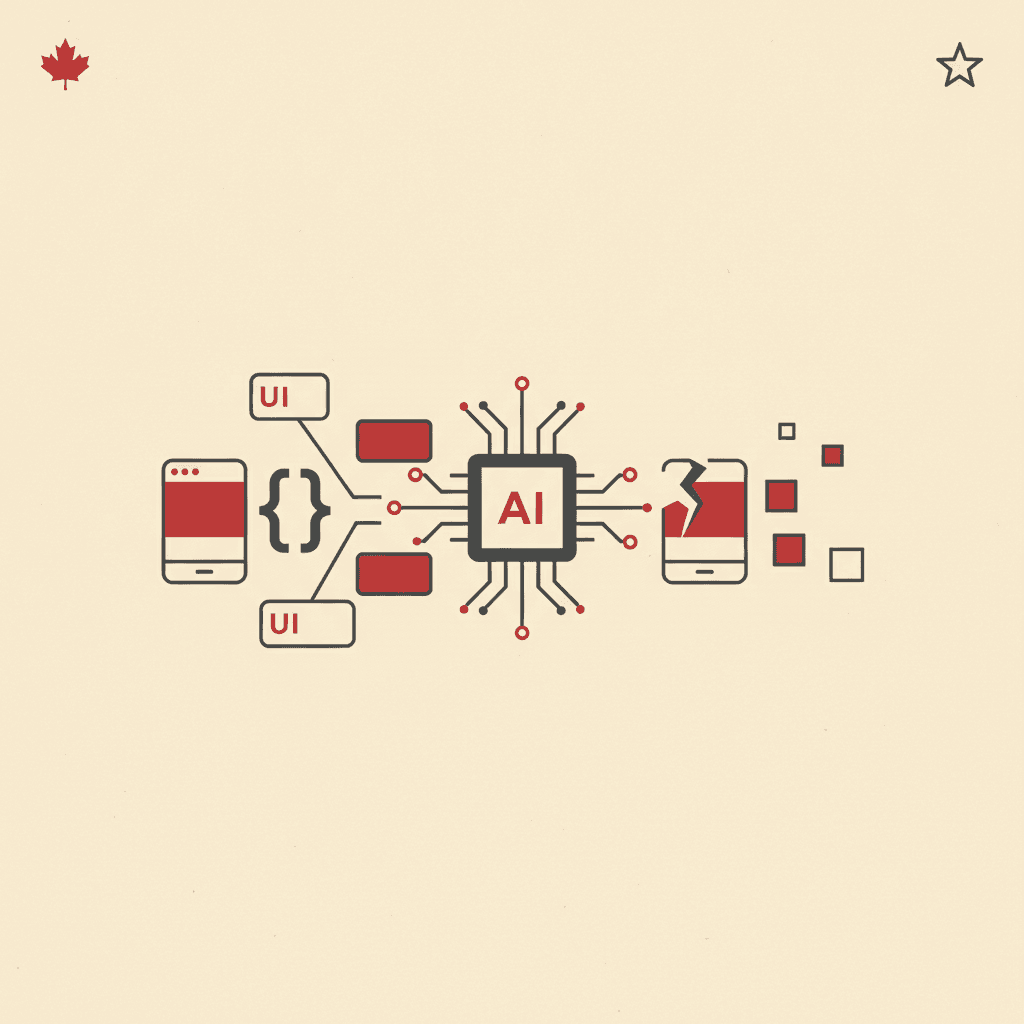
The term "vibe coding" — describing what you want in plain language and letting an AI generate the code — entered the mainstream in early 2025 and became a default way to prototype through 2026. The shift wasn't a single product launch. It was a steady climb: frontier models from several major labs, plus a wave of AI app builders and coding assistants, moved the bar from "AI helps developers write code faster" to "someone with no coding background ships something that actually runs."
Riding alongside it was a widely quoted 2025 prediction, from a leading AI lab, that AI would soon be writing the vast majority of new code — the origin of the "90% of code" line you've probably seen. That claim set expectations sky-high, and it deserves a sober reality check (we get to it in the FAQ).
Here's the useful framing for a founder in 2026: the question is no longer whether you can build software without a developer. You often can. The question is what you can ship this way safely — and where the approach quietly stops working.
What non-technical founders can actually ship with AI
Start with the honest good news. For a non-technical founder, AI coding tools are genuinely capable of shipping a real, working slice of software — as long as the scope is contained and the stakes are contained with it. In broad terms, the reliably shippable category includes:
- Marketing sites and landing pages — the kind of build that used to mean hiring a freelancer for a weekend.
- Simple internal tools and dashboards — a form, a small database, a view of your own data, an admin panel only you touch.
- MVPs and prototypes — enough of a product to validate an idea, run a demo, or show early users what you mean.
- Automations and integrations — small scripts that connect tools you already use and remove repetitive work.
- Content-driven front-ends — directories, simple catalogues, and thin app layers over well-trodden patterns.
What these have in common is a pattern worth naming: small scope, common patterns, and low-stakes data. When you're the only user (or one of a handful), when the data isn't sensitive, and when you're building something thousands of people have built before, AI fills in the well-documented path competently. That covers a surprising amount of what an early-stage founder actually needs to get moving.
The trouble starts the moment any one of those conditions flips.
Where vibe-coding breaks: security, scale, and maintenance
AI is excellent at the first 80% of a build — the part that makes a demo work. The last 20%, the part that makes software trustworthy, is where non-technical founders hit the wall. Four failure modes show up again and again:
- Security. Generated code often "works" in a demo while leaving real holes — exposed API keys, weak or missing authentication, unvalidated inputs, secrets committed where they shouldn't be. The problem isn't only that the model makes these mistakes; it's that a non-technical founder has no way to see them. The app looks finished. It isn't.
- Scale and performance. Code that's fine for ten users can fall over at ten thousand. Database structure, how data is queried, and basic architecture choices rarely surface in a plain-language prompt — until traffic makes them impossible to ignore, usually at the worst moment.
- Data and compliance. The instant you handle personal information or payments, you're in the territory of privacy and financial rules that AI-generated code typically does not handle correctly on its own. "It runs" and "it's allowed to hold this data" are two very different bars.
- Maintenance and the black-box problem. You can ship code you don't understand. What you can't do is maintain it. When something breaks, a dependency changes, or a customer needs a fix, you're debugging software you didn't write and can't fully read. This is the quiet tax on vibe coding, and it compounds over time.
None of this means the tools are a trap. It means the right mental model is "powerful prototype engine," not "developer replacement." Ship the prototype, validate the idea, then bring in real engineering review before anything sensitive — payments, customer data, anything you'd be embarrassed to see breached — goes live to the public. Treat AI-generated code the way you'd treat a first draft from a fast but unsupervised contractor: useful, and not yet accountable.
Who this is for
This is the operating reality now for a specific set of North American builders:
- Non-technical founders building a product without a technical cofounder, who no longer have to wait for one to test an idea.
- Solo founders and indie hackers validating fast and cheaply before committing real money.
- Creators, actors, and newcomers turning a skill or an audience into a tool, a booking system, or a small service.
There's a cross-border wrinkle worth flagging, because it's exactly where the "AI builds everything" story falls apart. Software is borderless — an AI-built app doesn't know or care whether you're in Toronto, Vancouver, or across the US line. A founder living in Canada might build and sell into the US; a US-based founder might launch a Canadian-facing service. AI ignores those borders completely. The business underneath the app does not — and that's where the last, uncrossable line sits.
What AI can build — and what it can't make real
Here's the line vibe coding can't cross: you can ship the app, but you can't ship the company.
The moment your prototype turns into a business — taking payments, signing real customers, opening a bank account, putting your name on invoices — AI's reach ends and the real-world layer begins. That layer is the same one we mapped out in AI can run your one-person company in 2026 — except for these 3 things: a business address institutions actually accept, the entity registration itself, and a bank account with an identity check behind it. No model can register your company, sign as the incorporator, or pass a bank's know-your-customer verification on your behalf. Those are deliberate real-world checks that a language model is designed not to be able to fake.
For a founder in Canada — or a cross-border founder building for Canadian customers — that means two concrete steps AI can research for you but can't complete: registering or incorporating the entity, and attaching a real business address to it. Our guide to incorporating in Toronto walks through the registered-office address the filing actually requires, and our rundown of virtual business address providers in Canada compares the options for founders who don't want their home address on a public registry.
The practical read: let AI accelerate the build, and set the business foundation deliberately underneath it. If you're prototyping something you intend to turn into a real company, get the address settled early so your registration, tax file, bank account, and invoices all point to the same place. You can get a U.S. business address and use it on every record from the first filing forward.
FAQ
Is AI really writing 90% of code in 2026? It's a headline drawn from a 2025 prediction, not a measured fact about your project. AI does generate a large and growing share of the code in many teams, and for a bounded prototype it can produce most of what runs. But "generating code" and "shipping trustworthy production software autonomously" are not the same thing. Humans still architect, review, secure, debug, and maintain — and the more sensitive the software, the more that human layer matters. Read the "90%" claim as directional hype about a real trend, not as permission to skip engineering judgment.
Can a non-technical person actually build an app with AI tools? Yes, within limits. You can realistically ship landing pages, simple internal tools, MVPs, prototypes, and automations by describing what you want. Where it gets risky is anything involving user accounts, payments, personal data, or real scale — those need security and architecture decisions that plain-language prompts don't reliably cover. A good rule of thumb: build the prototype yourself, then get real engineering review before anything sensitive goes live to the public.
Is vibe-coded software safe to launch to real customers, and how do I maintain it? Treat it as a first draft, not a finished product. The two things that most often bite founders are security (exposed keys, weak authentication, mishandled data) and maintenance (you're stuck when code you didn't write breaks). Before a public launch that touches customer data or payments, have someone with engineering experience review it — and budget for ongoing maintenance rather than assuming the app is "done." AI lowers the cost of the first version; it doesn't remove the cost of keeping software alive.
Bottom line
Vibe coding is one of the genuine shifts of 2026: a non-technical founder can now ship real, useful software without a developer. That's not hype. What is hype is the leap from "I built a working prototype" to "AI runs my whole business." The tools that build software and the requirements that make a business real are two different layers. AI increasingly owns the first. The second — registering the entity, an address institutions accept, and a bank account that clears its identity check — still lands on you, and it rests on one verifiable business address tied to your name.
Build fast with AI. Just set the real-world foundation underneath it deliberately — and if you're turning a prototype into a company, get a U.S. business address before your first filing.
This brief is general information for founders, not legal, tax, financial, or security advice. Confirm the specifics for your situation with a qualified professional — and have sensitive software independently reviewed — before you launch, file, or open accounts.
Sources: "Vibe coding" as a term entered mainstream use in early 2025 and was tracked by major dictionaries and technology press through 2026. The "AI will write the vast majority of code" framing traces to a widely quoted 2025 prediction from a leading AI lab. Claims about what AI can build autonomously are cited here as directional industry commentary, not measured benchmarks; verify current tool capabilities directly before relying on them.