Key takeaways
- Child care in Canada is regulated provincially, not federally. Ontario operates under the Child Care and Early Years Act, 2014 (CCEYA) and Ontario Regulation 137/15; British Columbia operates under the Community Care and Assisted Living Act (CCALA) and the Child Care Licensing Regulation (BC Reg 332/2007). The federal layer is funding (CWELCC), not licensing.
- A licensed daycare has two address surfaces, not one. The provincial Ministry registration and the corporation's registered office can both accept a commercial Canada Post Unit/# address; the physical operating premises where children are present cannot, because it is inspected for square footage, staff-to-child ratio, fire safety, and first aid.
- Ontario distinguishes 5 unrelated children (unlicensed allowed) from 6 or more children (licence required) in a home-based setting under CCEYA s.6. BC's Child Care Licensing Regulation prescribes several licensed programme categories — this guide focuses on the five most commonly used daycare types: Group, Multi-Age, Family, In-Home Multi-Age, and Occasional Child Care — each with its own staffing, space, and age-mix rules.
- Licensed child care services in Canada are GST/HST-exempt under Excise Tax Act Schedule V, Part IV, section 1. The exemption is a structural feature of the sector that interacts with how a daycare files T2 corporate returns and how the CWELCC ($10-a-day) funding flows from the province on top of parent fees.
Short answer
A licensed daycare in Canada has at least two addresses that matter, and a commercial mailbox is the right answer for one of them and the wrong answer for the other. The Ministry's registration address and the corporation's registered office — both pieces of paper held by ServiceOntario or BC Registries and the provincial Ministry of Education — accept a real commercial Canadian street address in Canada Post Unit/# format. The physical premises where children are cared for, on the other hand, must be a real operating space that the Ministry inspects against the Child Care and Early Years Act, 2014 in Ontario or the Community Care and Assisted Living Act and the Child Care Licensing Regulation (BC Reg 332/2007) in British Columbia, and that space cannot be a mailbox.
Ontario's licensing threshold is the 5-vs-6 rule in CCEYA s.6: a home-based caregiver may look after up to five unrelated children without a licence; the moment a sixth unrelated child is added, the operation must either be licensed directly or operate under a licensed home-based child care agency. BC's Child Care Licensing Regulation takes a different approach — instead of a single threshold, the regulation defines five distinct programme types (Group, Multi-Age, Family, In-Home Multi-Age, Occasional) and applies separate space, staffing, and age-mix rules to each. Above either threshold, the daycare operator files with the province under the licensing regime, sets up a corporation with a registered office, registers with the CRA, and may join the Canada-Wide Early Learning and Child Care (CWELCC) system that brings parent fees down to roughly $10 per day per child for participating providers.
Two regulators, one sector — Ontario CCEYA vs BC CCALA
Child care licensing sits with the province in every Canadian jurisdiction. There is no federal child care licence, and the federal government's role is funding and standard-setting through bilateral agreements with each province under the Canada-Wide Early Learning and Child Care programme. The Ontario and BC frameworks share the same overall shape — an authorising act, a regulation that sets the operational rules, a Ministry that issues licences, and a public licensing system that lets families verify a provider — but the statutes, the language, and the threshold rules are not identical.
| Item | Ontario | British Columbia |
|---|---|---|
| Authorising act | Child Care and Early Years Act, 2014 (CCEYA) | Community Care and Assisted Living Act (CCALA) |
| Operational regulation | Ontario Regulation 137/15 — General | BC Regulation 332/2007 — Child Care Licensing Regulation |
| Licensing Ministry | Ministry of Education, Child Care Branch | Ministry of Education and Child Care, regional health authority licensing officers |
| Public verification | Child Care Licensing System (CCLS) | Child Care Map (BC) and the regional health authority's licensing report database |
| Home-based licensing threshold | Up to 5 unrelated children unlicensed; 6 or more triggers licensing | Up to 2 children unlicensed; licensed types start at Family Child Care or In-Home Multi-Age |
| Statutory programme types | Licensed home child care (through an agency) and licensed centre-based child care | Group, Multi-Age, Family, In-Home Multi-Age, Occasional |
| Funding programme | CWELCC opt-in, administered by the Ministry of Education and Consolidated Municipal Service Managers / District Social Services Administration Boards | CWELCC opt-in via the Child Care Fee Reduction Initiative (CCFRI) and the $10 a Day ChildCareBC expansion |
| GST/HST treatment | Exempt — Excise Tax Act Schedule V Part IV s.1 | Exempt — Excise Tax Act Schedule V Part IV s.1 |
The Ontario Day Nurseries Act — the older statute that some legacy guides still reference — was repealed and replaced by CCEYA when CCEYA came into force in 2015. A 2026 daycare file in Ontario should cite CCEYA and Ontario Regulation 137/15, not the Day Nurseries Act or its older regulation. In BC, the relevant statute is CCALA combined with the Child Care Licensing Regulation (BC Reg 332/2007), not a stand-alone child care act.
Where a virtual mailbox fits — and where it does not
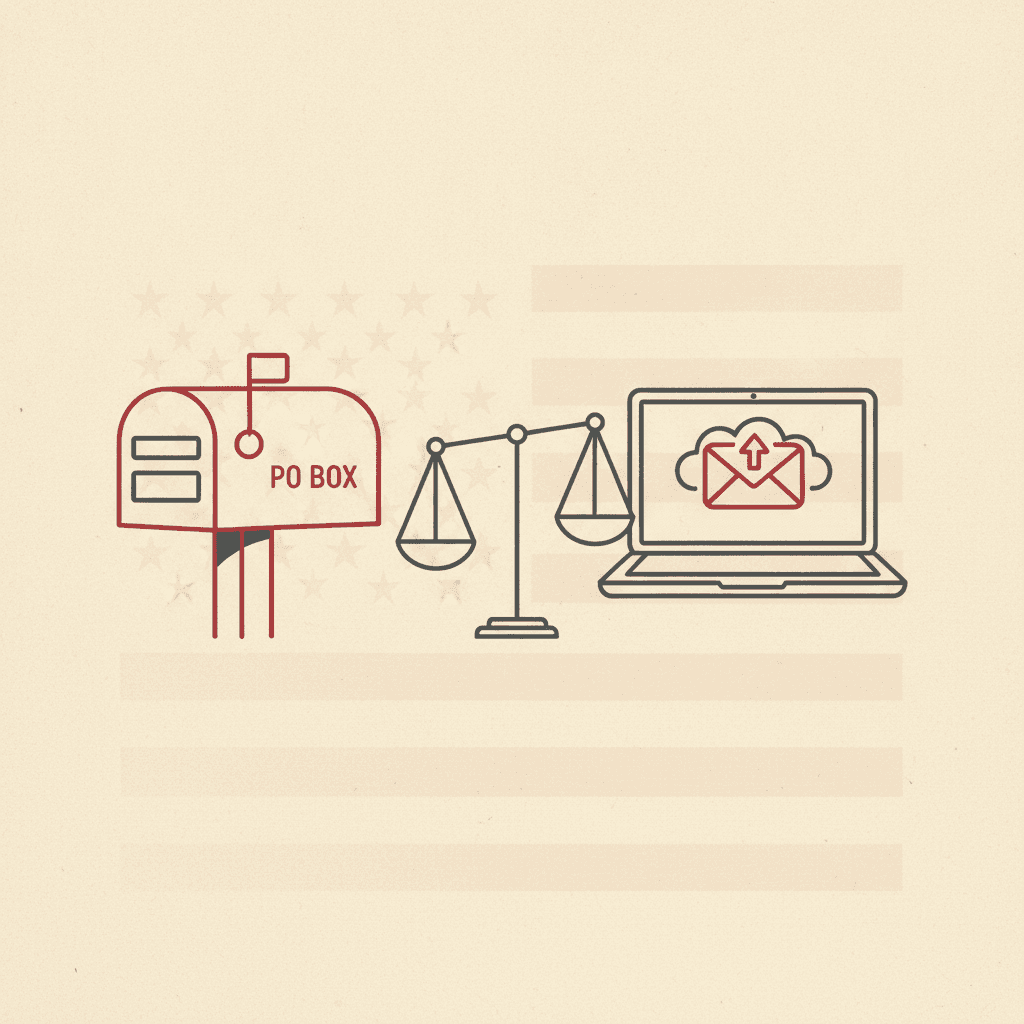
This is the part most generic "how to open a daycare" guides skim past. A licensed daycare has at least two address surfaces, and the commercial Canada Post Unit/# address from a commercial mailbox provider is the right answer for one surface and a structural mismatch for the other.
| Surface | What it is | Virtual mailbox? |
|---|---|---|
| Corporation's registered office | OBCA s.14 (Ontario) or BCBCA s.34 (BC) — the address on the Articles where official documents are served | Yes. Commercial street address in Canada Post Unit/# format satisfies the registry, and P.O. Boxes are not accepted. |
| Ministry licensing file — head office / corporate address | The corporate address the Ministry's Child Care Branch (Ontario) or the regional health authority licensing officer (BC) has on file for the licence holder | Yes in most cases. The Ministry's licence-holder address is a corporate / mailing surface, separate from the inspected premises. |
| CRA Business Number and corporate tax mailing | Mailing address on the BN, T2, payroll, and (where applicable) GST/HST account | Yes. Same Canada Post Unit/# address as the registered office. |
| Physical operating premises | The actual room and building where children are cared for during operating hours | No. The premises are inspected for square footage per child, staff-to-child ratios, fire egress, first-aid equipment, food preparation safety, and outdoor play space, and they have to be the real space children are in. |
The first three rows are pure administrative addresses — the corporation needs somewhere for ServiceOntario, BC Registries, the Ministry's licence-renewal mailings, and the CRA's T2 correspondence to land. A commercial Canada Post Unit/# address handles those without exposing the operator's home on the corporate registry's public search or on the regional health authority's licence database. The fourth row is the part a virtual mailbox cannot substitute for: a licensed centre or a licensed home-based daycare has a physical room with children in it, and Ontario Regulation 137/15 (centres: minimum 2.8 square metres of unobstructed indoor play space per child; staff:child ratios that vary by age) and BC Regulation 332/2007 (Schedule G ratios; minimum 3.7 square metres per child for Group Child Care for children under 36 months) both require the licensing officer to inspect that room.
In Ontario, the same dichotomy is what splits licensed home child care from licensed centre-based child care in CCEYA: a home-based caregiver under a licensed home child care agency operates from their own home, the agency has its own registered office, and the agency's office can be a commercial address while the caregiving homes are visited by Ministry inspectors. In BC, In-Home Multi-Age Child Care and Family Child Care are licensed in the licensee's home; Group Child Care and Multi-Age Child Care are licensed in a commercial premises. In every case, a virtual mailbox is the right answer for the corporate / Ministry head-office surface and is structurally not the answer for the inspected premises.
The mirror image of this two-surface split is a home care or personal support worker (PSW) agency, where the inspected-premises surface simply does not exist. A daycare's defining feature is a room full of children that a licensing officer inspects for square footage, ratios, and fire safety — the very surface a mailbox cannot be. A home care agency delivers its care in the client's own home, so there is no premises at the agency's address for anyone to inspect, and the whole address question collapses to the administrative surfaces a commercial mailbox covers. That inverse case — care that is regulated but delivered off-site, with no inspected premises of its own — is worked through in Home Care and PSW Agency Business Address in Canada.
The Ontario 5-vs-6 rule, properly stated
Ontario's CCEYA s.6 is the most commonly summarised — and most commonly garbled — piece of Canadian child care law in informal online guidance. The actual rule:
- An individual may provide home-based child care for up to five children under 13 years of age who are not common to the caregiver, in addition to any children of the caregiver's own family, without a licence under CCEYA.
- The moment a sixth unrelated child is added, the activity becomes either a regulated home-based child care premises under a licensed home child care agency or an unauthorised operation. Operating beyond the five-child threshold without a licensing pathway is an offence under CCEYA Part IX.
- Within the five-child cap, there are sub-limits — for example, no more than two children under two years of age — that are routinely missed in informal summaries. Ontario Regulation 137/15 is the operative text.
What the rule does not say:
- It does not say a home-based caregiver "can have six children." Six is the threshold at which licensing kicks in, not a cap. Licensed home daycares under an agency can care for more than five.
- It does not apply to centre-based child care. Centres are licensed from the first child onward.
For an unlicensed home-based caregiver operating within the five-child cap, the address question is small — there is no Ministry licence, no public licensing record, and the operator is filing T1 self-employment income with the CRA on form T2125 from their own residential address (or a commercial mail-handling address). The address question gets larger the moment licensing enters the picture, because the Ministry's licence holder is then on a public licensing record (CCLS) that families can search.
BC's five licensed programme types
British Columbia does not have a single 5-vs-6 threshold. The Child Care Licensing Regulation (BC Reg 332/2007) prescribes several licensed programme categories, of which the five most commonly used daycare types are described below, and the operator chooses one based on the ages of the children, the number of children, and whether the care happens in a residence or a commercial space.
| BC programme type | Setting | Typical capacity | Age mix |
|---|---|---|---|
| Group Child Care | Commercial / institutional | Higher capacity in age-segregated groups (e.g., infant/toddler, 3 to 5 years, school age) | Single age band per programme |
| Multi-Age Child Care | Commercial / institutional | Up to 8 children | Mixed ages from 30 months up to 12 years (with limits on under-3 numbers) |
| Family Child Care | Licensee's own residence | Up to 7 children | Mixed ages with limits on infants and toddlers |
| In-Home Multi-Age Child Care | Licensee's own residence | Up to 8 children | Mixed ages with limits on under-3 numbers |
| Occasional Child Care | Commercial premises | Drop-in / short-stay model | Mixed ages, programme-specific limits |
The detailed counts and age sub-limits live in the regulation's schedules and have been amended over time; the current numbers should be confirmed against the Child Care Licensing Regulation on bclaws.gov.bc.ca and the licensing officer's most recent application package from the regional health authority. BC Reg 332/2007 also prescribes additional categories — such as Preschool, School Age Care on School Grounds, and Recreational Care — that fall outside the typical daycare scope this guide covers; operators in those formats should read the schedule sections that apply to their programme type directly. The structural point is that BC asks the operator to pick the programme type at the front of the application; the rest of the file — premises requirements, staffing ratios, outdoor space — follows from the programme type, not from a single capacity number.
CWELCC — the federal $10-a-day funding layer
The Canada-Wide Early Learning and Child Care (CWELCC) system is the federal funding programme launched in 2021 through bilateral agreements with each province and territory, aimed at reducing average parent fees for licensed care to roughly $10 per day per child by the end of the 2025-26 fiscal year. CWELCC is not a licensing regime — it does not change CCEYA in Ontario or CCALA in BC. It is an opt-in funding stream that licensed providers can join, in exchange for committing to fee caps, fee-reduction schedules, and reporting obligations set by the province administering the agreement.
What CWELCC means for the address question:
- A provider that opts into CWELCC files additional reporting through the province's CWELCC portal. In Ontario, that flows through the Ministry of Education and the local Consolidated Municipal Service Manager (CMSM) or District Social Services Administration Board (DSSAB). In BC, it flows through the Child Care Fee Reduction Initiative (CCFRI) and the $10 a Day ChildCareBC expansion, administered by the Ministry of Education and Child Care.
- The corporate / mailing address on the CWELCC file is the same Canada Post Unit/# address that sits on the registry and the licensing file. The physical premises field on the CWELCC file is the actual operating space.
- A provider that does not opt into CWELCC continues to operate under the provincial licence with private fee-setting. CWELCC is voluntary, not part of the licence itself.
The funding flow is one reason the corporate address surface is worth getting right from day one. The province pays CWELCC funds to the licensed corporation, the corporation files T2 returns showing the funded revenue, and the CRA's mailings come back to whichever address the corporation registered. A consistent commercial address across the registry, the licence, the CRA, and the CWELCC file is the configuration that does not invite reconciliation work later.
GST/HST — daycare services are exempt, but corporate filings are not
Childcare services in Canada — specifically, services of caring and supervising children 14 years of age or under for periods of less than 24 hours per day — are exempt from GST/HST under the Excise Tax Act Schedule V (Exempt Supplies), Part IV, section 1. The exemption is structural: it applies to the service itself, regardless of who provides it, as long as the service meets the description in the schedule.
What that means in practice:
- A licensed daycare does not charge GST or HST on parent fees, and it does not claim input tax credits on inputs that relate to providing the exempt service (rent, supplies, food, staff costs net of the regular employer-side accounts). The daycare is not in the GST/HST system as a registrant for those activities.
- A daycare corporation may still need a CRA Business Number for payroll (employee deductions, T4s, EI, CPP) and for filing T2 corporation income tax returns. The Business Number lives at the corporate mailing address — the same Canada Post Unit/# address that sits on the registry and on the Ministry's licence file.
- If the corporation operates additional non-exempt activities (for example, sells branded merchandise or runs a parent education seminar series that does not qualify as exempt childcare), those separate revenue streams may pull the corporation into GST/HST registration. The exempt childcare revenue stays exempt; the taxable side carries its own registration logic.
A common careless summary online treats daycare as if it were a regular GST/HST registrant. It is not, for the childcare service itself. The exemption is one of the older and clearer items in Schedule V Part IV, and it interacts with the T2 corporate filing — the corporation files a T2, the daycare revenue is reported, the GST/HST exemption keeps that revenue from flowing through a GST/HST return — without changing what address the corporation uses on its CRA file.
Order of operations for a new licensed daycare
A new licensed daycare in Ontario or BC has roughly the same sequence of filings, and the address chosen at step 1 propagates across every subsequent surface. Operators who pick the address late, or pick a different address for each filing, usually end up reconciling four or five inconsistent records later.
- Choose the corporate / mailing address. A Canada Post Unit/# format commercial street address in Ontario for an Ontario daycare, or in BC for a BC daycare, satisfies the registry's registered-office rule, the Ministry's licence-holder mailing address, the CRA's BN file, and a future CWELCC opt-in. Toronto and Vancouver are where most licensed centre-based applications cluster.
- Identify the physical operating premises separately. For Ontario centre-based care, that is the commercial space that will be inspected against Ontario Regulation 137/15. For BC Group or Multi-Age Child Care, the commercial space inspected against BC Reg 332/2007. For licensed home-based care, the home itself.
- Incorporate under the OBCA (Ontario) or BCBCA (BC). Set the registered office to the Canada Post Unit/# commercial address. Federal CBCA incorporation is uncommon for daycare because the licensing is provincial; an Ontario daycare wants an Ontario corporation, a BC daycare a BC corporation. The trade-off between federal and provincial incorporation for a Canadian small corporation generally is covered in Federal vs Ontario vs BC Incorporation.
- Apply to the Ministry for the licence. In Ontario, the application goes through the Child Care Licensing System (CCLS) and is assessed by the Ministry of Education's Child Care Branch programme advisors. In BC, the application goes to the regional health authority's community care facilities licensing officer for the area where the premises sits. The Ministry's licence application asks for the corporate address (administrative) and the premises address (operational) as separate fields.
- Register with the CRA for a Business Number and a payroll account. GST/HST registration is not required for the exempt childcare service; it is required if the corporation operates a separable taxable activity. Set the BN's mailing address to the same Canada Post Unit/# address used for the registered office.
- Open a business bank account with one of the major Canadian banks. KYC for a licensed daycare typically expects the Articles, the Ministry licence, and the corporate address — the same commercial address is on all three. The business banking step is covered in Opening a Canadian Business Bank Account.
- (Optional) Opt into CWELCC with the province's CWELCC portal once the licence is active and the centre has been operating long enough to have a fee history.
A virtual address from Auteur sits cleanly at step 1 and propagates through steps 3 through 7 unchanged. The physical premises at step 2 is always a separately identified space.
Where Auteur fits in the Canadian licensed daycare address landscape
Auteur is Canadian-owned, with commercial Canada Post Unit/# addresses in Toronto and Vancouver — the two cities that host most Ontario CCEYA and BC CCALA-licensed corporate applications. The address format satisfies the OBCA registered-office rule, the BCBCA registered-office rule, the Ministry of Education's licence-holder corporate-address field in both provinces, the CRA Business Number mailing address for T2 and payroll, and the CWELCC corporate-address field for licensed providers opting in.
Three things to keep separate when a virtual address is used for a licensed daycare:
- Corporate / Ministry head office address — virtual works. The registered office on the Articles, the licence-holder corporate-address field at the Ministry, the CRA BN mailing address, and the CWELCC corporate-address field are all administrative surfaces. A Canada Post Unit/# commercial address handles all four.
- Physical operating premises — virtual does not work. The room where children are cared for is inspected by a Ministry programme advisor in Ontario or a regional health authority licensing officer in BC. That space has to be the real space. A commercial mailbox provider does not provide an inspectable child care premises and never will.
- Province alignment. An Ontario CCEYA licence holder uses an Ontario corporate address. A BC CCALA licence holder uses a BC corporate address. OBCA and BCBCA each require the registered office to sit inside their own province.
Reserve a Toronto or Vancouver address and the same Canada Post Unit/# address can sit on the Articles, the Ministry's licence holder file, the CRA Business Number, and a CWELCC opt-in from day one. The physical centre or licensed home stays on its own line in the licence file.
FAQ
Do I need a licence to run a daycare in my home in Ontario? Not if you care for five or fewer unrelated children under 13 at any one time, in addition to your own family's children, under CCEYA s.6 and Ontario Regulation 137/15. The moment a sixth unrelated child is added, the activity must operate under a licensed home child care agency or hold a licence directly. Sub-limits inside the five-child cap — for example, on infants and toddlers — also apply. The corporate / mailing address question is small for an unlicensed caregiver and gets larger the moment a licence enters the picture, because the licensee then appears on the Child Care Licensing System (CCLS).
Can a Canadian licensed daycare use a virtual address on the licence? For the corporate / mailing surfaces — the registered office on the OBCA or BCBCA Articles, the licence-holder corporate address at the Ministry, the CRA Business Number mailing address, and a CWELCC opt-in — yes, a commercial Canada Post Unit/# address from a commercial mailbox provider works in both Ontario and BC, and P.O. Boxes do not. For the physical operating premises field — the actual space where children are cared for — no. The premises are inspected against Ontario Regulation 137/15 or BC Regulation 332/2007 for space, staffing ratios, fire safety, and first aid, and a virtual address is structurally not an inspectable child care premises.
Are daycare services GST/HST taxable in Canada? No. Childcare services — caring and supervising children 14 years of age or under for periods of less than 24 hours per day — are exempt from GST/HST under Excise Tax Act Schedule V, Part IV, section 1. A licensed daycare corporation does not charge GST or HST on parent fees and does not claim input tax credits on inputs that relate to the exempt childcare service. The corporation may still need a CRA Business Number for payroll, T2 filing, and any separable non-exempt activity, and the BN's mailing address can be the same commercial Canada Post Unit/# address used for the registered office and the Ministry licence file.
Bottom line
A licensed daycare in Canada lives on at least two address surfaces, and a commercial mailbox is the answer for one and not for the other. The corporate registered office, the Ministry's licence-holder corporate mailing address, the CRA Business Number, and a CWELCC opt-in — all four — accept a real commercial Canadian street address in Canada Post Unit/# format, and none of them accept a P.O. Box. The physical operating premises where children are cared for cannot be a mailbox: it is a real room inspected for square footage, staffing ratios, fire safety, and first aid against Ontario Regulation 137/15 under the Child Care and Early Years Act, 2014, or BC Regulation 332/2007 under the Community Care and Assisted Living Act.
Ontario's home-based threshold is five unrelated children unlicensed, six or more licensed. BC's licensed framework, for the most commonly used daycare types, is split across Group, Multi-Age, Family, In-Home Multi-Age, and Occasional — each with its own space, staffing, and age-mix rules, with the Child Care Licensing Regulation also prescribing additional categories such as Preschool and School Age Care on School Grounds. Above either threshold, the operator incorporates under OBCA or BCBCA, registers with the CRA, files with the Ministry for a licence, and may opt into CWELCC for the $10-a-day funding layer. A single Auteur address in Toronto for an Ontario CCEYA licensee or Vancouver for a BC CCALA licensee covers the four administrative surfaces from day one; the operating premises sits on its own line in the licence file because it has to.
For corporations that hold professional licences rather than child care licences — physicians, lawyers, accountants, dentists, engineers — the parallel two-surface pattern is covered in Professional Corporation Business Address in Canada. For the general jurisdiction choice between federal, Ontario, and BC incorporation that sits underneath every licensed-sector corporation, see Federal vs Ontario vs BC Incorporation. And for licensed daycare operators bringing in an in-home caregiver under the federal Home Child Care Provider Pilot stream — a separate immigration pathway with its own business-address requirements on the LMIA file — see LMIA Business Address Requirements.
Reserve a Toronto or Vancouver address and the same Canada Post Unit/# address sits on the OBCA or BCBCA Articles, the Ministry of Education licence holder file, the CRA Business Number, and a future CWELCC opt-in. The operating centre or licensed home stays on its own line, because that is the line that gets inspected.