Key takeaways
- The federal answer flipped, and it turns on formation. On March 26, 2025, FinCEN published an interim final rule in the Federal Register (document 2025-05199) that narrowed "reporting company" to entities formed under foreign law and registered to do business in a US state. Companies created in the US — and their beneficial owners — are now exempt from federal BOI reporting.
- The deciding variable is where the company was formed, not who owns it. A non-US person (a Canadian, say) who forms a US LLC is on the exempt side. A foreign company registered into a US state is a foreign reporting company that must file.
- Foreign reporting company deadlines: registered before March 26, 2025 → the window closed April 25, 2025; registered on or after → 30 calendar days after notice of effective registration. US-person beneficial owners of such a company are not reported.
- New York added a state layer that outlived the federal rollback. The New York LLC Transparency Act (NYLTA) took effect January 1, 2026 and now covers only LLCs formed outside the US. Existing foreign LLCs have until December 31, 2026 to file a disclosure or an attestation of exemption.
- BOI is not a tax filing — or a banking check. Being exempt from BOI says nothing about IRS obligations — a foreign-owned US LLC can still owe a Form 5472 whether or not it files a BOI report — nor about the beneficial-ownership certification a bank collects at account opening, a separate regime again.
The short answer: it turns on where your company was formed, not who owns it
Do I have to file a BOI report in 2026? For most founders reading this, the honest answer is now no — but only because of where your company was formed, and that's the exact distinction almost every search result blurs.
Here is the federal position as it stands in mid-2026. On March 26, 2025, FinCEN published an interim final rule in the Federal Register (document 2025-05199) that rewrote who counts as a "reporting company" under the Corporate Transparency Act. It took effect immediately, and it narrowed the rule to a single category: entities formed under the law of a foreign country that then register to do business in a US state or tribal jurisdiction. Every company created in the United States — what the rule used to call a "domestic reporting company" — along with its beneficial owners, is now exempt from filing a federal BOI report.
So if you formed a Delaware LLC, a Wyoming LLC, or a New York corporation — anything chartered in a US state — you are on the exempt side of the line, and your nationality doesn't change that. If you registered a foreign company into a US state, you're on the filing side. That single fork is the whole question, and the next section turns it into a test you can run in ten seconds.
One caution before you file this away as settled: it is an interim final rule. FinCEN has signaled it intends to finalize a version of it, and the Corporate Transparency Act has already lurched through on-again, off-again deadlines once. Treat the current exemption as real, but not permanent — the rule could move again.
Which one are you? The formation-vs-registration test
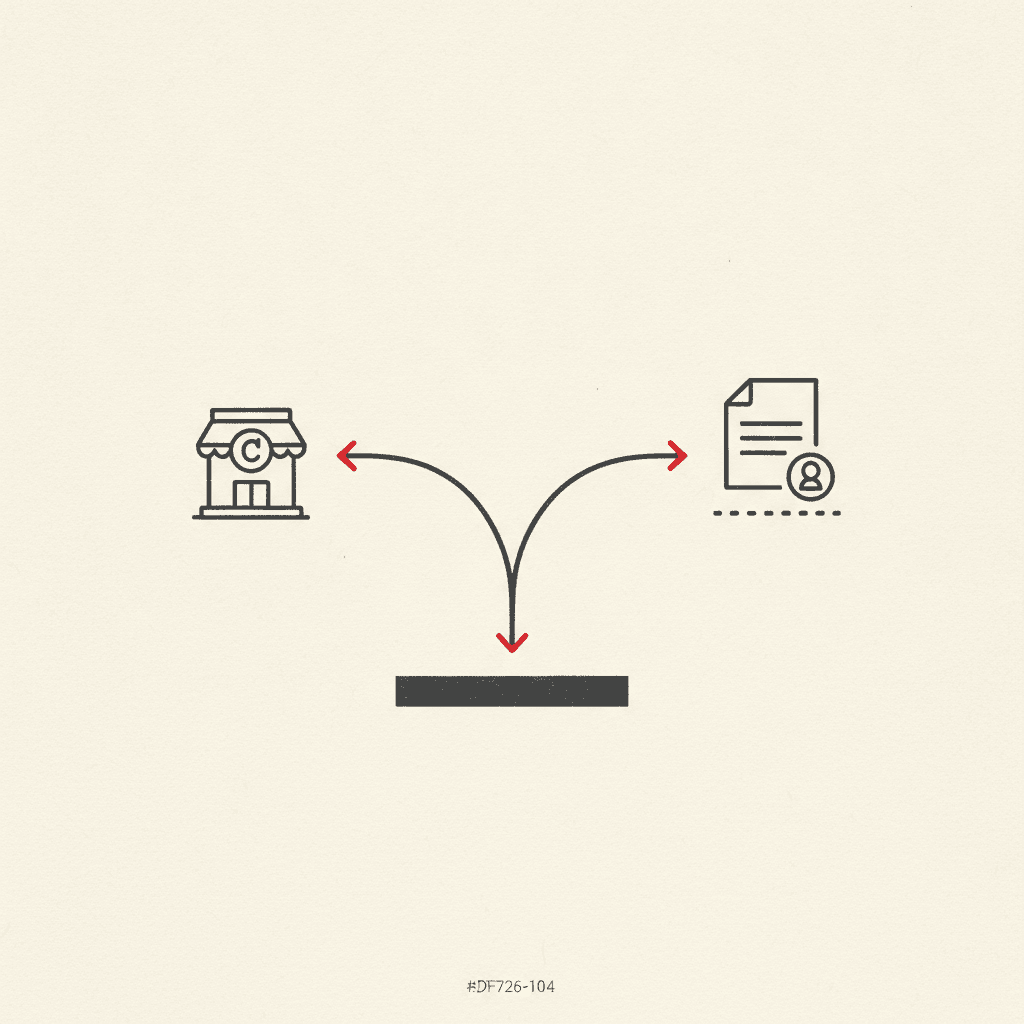
Run one question: did you form your company in the US, or did you register a foreign company into a US state? The answer decides everything below.
| Your setup | Federal BOI (FinCEN) | New York (NYLTA) | Deadline |
|---|---|---|---|
| You formed an LLC or corporation in a US state (Delaware, Wyoming, New York, etc.) — even as a non-US person | Exempt — US-formed entities and their owners no longer file | Exempt — US-formed LLCs are outside NYLTA | None |
| You registered a foreign-law company (e.g., a Canadian corporation) to do business in a US state | Must file as a foreign reporting company | If registered in New York: file a Disclosure or an Attestation of Exemption | Federal: 30 days after effective registration (or April 25, 2025 if registered before March 26, 2025). NY existing: Dec 31, 2026 |
| You have no US entity or US registration at all | Not a reporting company | Not covered | None |
The trap this table breaks is the instinct that "I'm Canadian" (or German, or Indian) is the deciding fact. It isn't. Federal BOI status turns on the jurisdiction that chartered the entity, not on the passport of its owner. A wholly foreign-owned company formed in Delaware is exempt; a Canadian-owned company formed in Canada and registered into Texas has to file. One more wrinkle for the filing side: for a foreign reporting company, the US-person beneficial owners are not reported, and a US person doesn't file BOI about that company either.
The federal rule, dated — and why "final" is doing a lot of work
The Corporate Transparency Act took effect on January 1, 2024, and for its first year it was one of the most chaotic filing obligations on the books. In early 2025, after a court injunction against the CTA was lifted, FinCEN briefly set a new filing deadline of March 21, 2025 — the line you will still see quoted, out of date, in a lot of search results. Then, on March 26, 2025, the interim final rule redefined "reporting company" and lifted the requirement for every US-formed entity.
For the companies that are still in scope — foreign reporting companies — the deadlines are specific:
- Registered before March 26, 2025: the filing window closed April 25, 2025.
- Registered on or after March 26, 2025: 30 calendar days after receiving notice that the registration is effective.
The underlying beneficial-owner test didn't change: a beneficial owner is an individual who owns or controls 25% or more of the entity, or who exercises substantial control over it. What changed is only which entities have to run that test at all.
And the label matters. This is an interim final rule, not a settled statute-plus-regulation package. FinCEN has said it intends to issue a finalized rule, and given how many times this requirement has already reversed, the safe planning posture is: the exemption is real today, but watch for the next revision rather than assuming it is locked in.
Updated July 26, 2026 — the revision still hasn't landed. On July 21, 2026, FinCEN Director Andrea Gacki appeared before the House Financial Services Subcommittee on National Security, Illicit Finance, and International Financial Institutions for an oversight hearing. Her written testimony runs two pages, and beneficial ownership isn't in it — the subjects are the whistleblower program, last October's SAR FAQs, April's proposed rule to "fundamentally reform" AML/CFT programs, and stablecoin obligations under the GENIUS Act. Trade press covering the hearing reported that she told members the revised beneficial-ownership rule was close to done, but that came at the hearing itself rather than in the filed statement, and no date was given. What matters for planning is what hasn't changed: the March 2025 interim final rule is still the operative one, and your exemption still rests on it. Sixteen months on, "interim" is still carrying the weight this section flagged.
New York didn't roll back when Washington did
Here is the layer that catches founders who read one federal headline and stop: a federal exemption is not a state exemption. New York built its own beneficial ownership regime, the New York LLC Transparency Act (NYLTA), and it took effect January 1, 2026 — after the federal requirement had already been pared back.
As it took effect, NYLTA's scope tracks the federal cut. On December 19, 2025, Governor Hochul vetoed bill S8432 — a measure that would have re-extended the Act to all New York LLCs — so the version left in force applies only to LLCs formed outside the United States. An LLC formed in New York, in another US state, in DC, or in a US territory falls outside NYLTA. So if you formed your LLC anywhere in the US, New York's regime doesn't reach you either.
If you registered a foreign-formed LLC into New York, though, the state clock is running:
- Existing foreign LLCs authorized in New York before January 1, 2026 have until December 31, 2026 to file either a Beneficial Ownership Disclosure Statement or an Attestation of Exemption.
- Newly authorized foreign LLCs get 30 days from their Certificate of Authority application.
- The beneficial-owner test mirrors the federal one — 25% ownership or substantial control — and the filing fee is $25.
The takeaway is a two-clock frame: the federal rollback quieted the FinCEN side for US-formed companies, but it did nothing to New York's separate requirement for foreign LLCs. Other states have floated their own transparency acts, so if you're registered in more than one state, the federal answer is only the first of several you need.
Why the search results still tell you to file
If you searched this and came away with whiplash — one page insists "requirements are back in effect, file by March 21, 2025," the next says "no need to file for US entities," and a video asks "is it still required in 2026?" — you're not misreading anything. You're watching information lag, not misinformation.
This rule changed several times in about fifteen months, and a search snippet freezes whatever a page said on the day it was written. A March 2025 headline reading "deadline March 21" was accurate for roughly a week before the March 26 rule superseded it; the article underneath may even have been quietly updated while the snippet stayed frozen. The contradictions aren't a fight between "right" and "wrong" sources — they're timestamps from different moments of a moving rule.
Anchor to two facts and the noise clears:
- The current federal cut is formation-based — a company formed in the US is exempt, regardless of who owns it.
- It rests on an interim rule that FinCEN could still revise, so it's worth re-checking before any deadline you think applies to you.
For Canadian founders: which direction are you pointing?
Cross-border founders trip on the formation-vs-registration line more than anyone, precisely because "I'm Canadian" feels like it should be the deciding fact. It isn't. What decides your federal BOI status is where the company was chartered, full stop. Two clean cases:
- You formed a US LLC or corporation from Canada. A Delaware or Wyoming LLC is the common move. That's a US-formed entity — federally exempt, and NYLTA-exempt even if it operates in New York. The address and tax mechanics of that setup are their own puzzle, including the trap that the CRA treats your US LLC as a foreign corporation rather than the disregarded entity the IRS sees — we cover that in US LLC owned by a Canadian resident.
- You registered your Canadian corporation into a US state to do business there. Now it's a foreign reporting company — it must file a federal BOI report within 30 days of effective registration, and if it registered in New York, it's inside NYLTA too.
There's also a mirror worth seeing. While the US moved toward a non-public FinCEN filing that most US-formed founders now skip entirely, Canada runs a public, searchable beneficial ownership registry for federal corporations — a very different design philosophy for the same idea. If you're incorporated on the Canadian side as well, the privacy mechanics there are in Canada's beneficial ownership registry and your home address.
One thing BOI is not: a tax filing
Because "reporting" and "filing" get used loosely, it's worth drawing a hard line: a BOI report is not a tax return, and a BOI exemption is not a tax exemption. They are separate systems run by separate agencies.
The most common collision is the foreign-owned single-member US LLC. It can be exempt from federal BOI reporting — it's US-formed — while still owing the IRS a Form 5472 attached to a pro forma 1120 every year, an entirely different obligation with its own steep penalties — a flat $25,000, whether or not you owe a dollar of US tax. Being off the BOI hook tells you nothing about your 5472, your income tax, or your state franchise filings. Don't let "I don't have to file BOI" quietly become "I don't have to file anything."
This is general information about a reporting rule that has changed repeatedly — not legal or tax advice. Confirm your own status with a qualified attorney or cross-border tax professional, and check FinCEN's current position, before you rely on any of it.
The setup layer: your registered address is the one thing that doesn't flip
Filing rules flip. Your registered address doesn't. Through every reversal of the last two years, one requirement never wavered: each of these entities still needs a real business address. A US LLC needs a registered agent and a business address whether or not it files BOI. A foreign company registering into a US state needs an address on that registration. A Canadian corporation needs a registered office back home. The reporting obligation toggled on and off; the address requirement is the stable slab underneath a rule that keeps sliding.
One asymmetry is worth holding onto, because the two files run in opposite directions: the beneficial-ownership file you send to FinCEN is non-public, while the state formation filing that carries your address is public from the day you file it — and which parts of it are public depends on which slot each address went into. That's a separate question with a separate answer, and we take it apart in which of your LLC addresses are public record.
Be clear about what Auteur is and isn't: Auteur doesn't file your BOI report, doesn't determine your reporting-company status, and isn't your attorney or tax preparer. What it handles is the address these registrations — and the notices that follow them — actually ride on.
- US founders can put a US business address behind the entity, handled through our partner save office on the US virtual office page.
- Canadian founders can anchor the Canadian side of the business on a Toronto or Vancouver address.
Either way, the North American virtual office hub branches to the right country, so your filings, your registered-agent forwards, and any FinCEN or state correspondence land in one monitored place instead of a home mailbox you might move out of.
FAQ
Who has to file a BOI report in 2026? Only foreign reporting companies — entities formed under the law of another country and registered to do business in a US state or tribal jurisdiction. Since the March 26, 2025 interim final rule, companies formed in the United States and their beneficial owners are exempt from federal BOI reporting. So a US-formed LLC or corporation doesn't file; a foreign-formed company registered into a US state does.
Do I have to file a BOI report if I own a foreign-owned US LLC? If the LLC was formed in the US — even with 100% foreign ownership — no. US-formed entities are exempt from federal BOI reporting regardless of who owns them; the rule turns on formation jurisdiction, not the owner's nationality. Watch the separate issue, though: a foreign-owned single-member US LLC may still owe the IRS a Form 5472, which has nothing to do with BOI.
Is BOI reporting still required in 2026? For foreign reporting companies, yes — and New York added its own state-level requirement (NYLTA) for LLCs formed outside the US, effective January 1, 2026. For US-formed companies, federal BOI reporting is not currently required. But the federal rule is an interim final rule that FinCEN has signaled it may revise, so confirm the current position before you decide.
What happens if I don't file a BOI report when I'm required to? The Corporate Transparency Act carries civil penalties, and potential criminal exposure, for a willful failure to report by an entity that actually is a reporting company. That's exactly why the formation-vs-registration test matters: you want to know which side of the line you're on before any deadline passes. If you're a foreign reporting company, confirm your filing window — 30 days from effective registration for new ones — with counsel.
Bottom line
For 2026, the BOI question comes down to one fork: where was your company formed? If you created it in a US state — a Delaware LLC, a New York corporation, anything US-chartered — the March 26, 2025 interim final rule (Federal Register document 2025-05199) exempts you and your beneficial owners from federal BOI reporting, and your nationality doesn't change that. If you registered a foreign-law company into a US state, you're a foreign reporting company and you do file — within 30 days of effective registration — and if that state is New York, the NYLTA layer that took effect January 1, 2026 applies to you as well. The stale "file by March 21, 2025" lines still floating around search results are timestamps from a rule that has since moved, not current instructions — and because it's an interim rule FinCEN may still revise, treat the exemption as real but keep an eye on the next change.
Whatever the rule does next, the address underneath stays put. Auteur can't file your BOI — but it can give US founders a US business address through our partner and Canadian founders a Toronto or Vancouver one. Start with the North American virtual office, and whichever way the rule turns, your registrations land somewhere you control.