Key takeaways
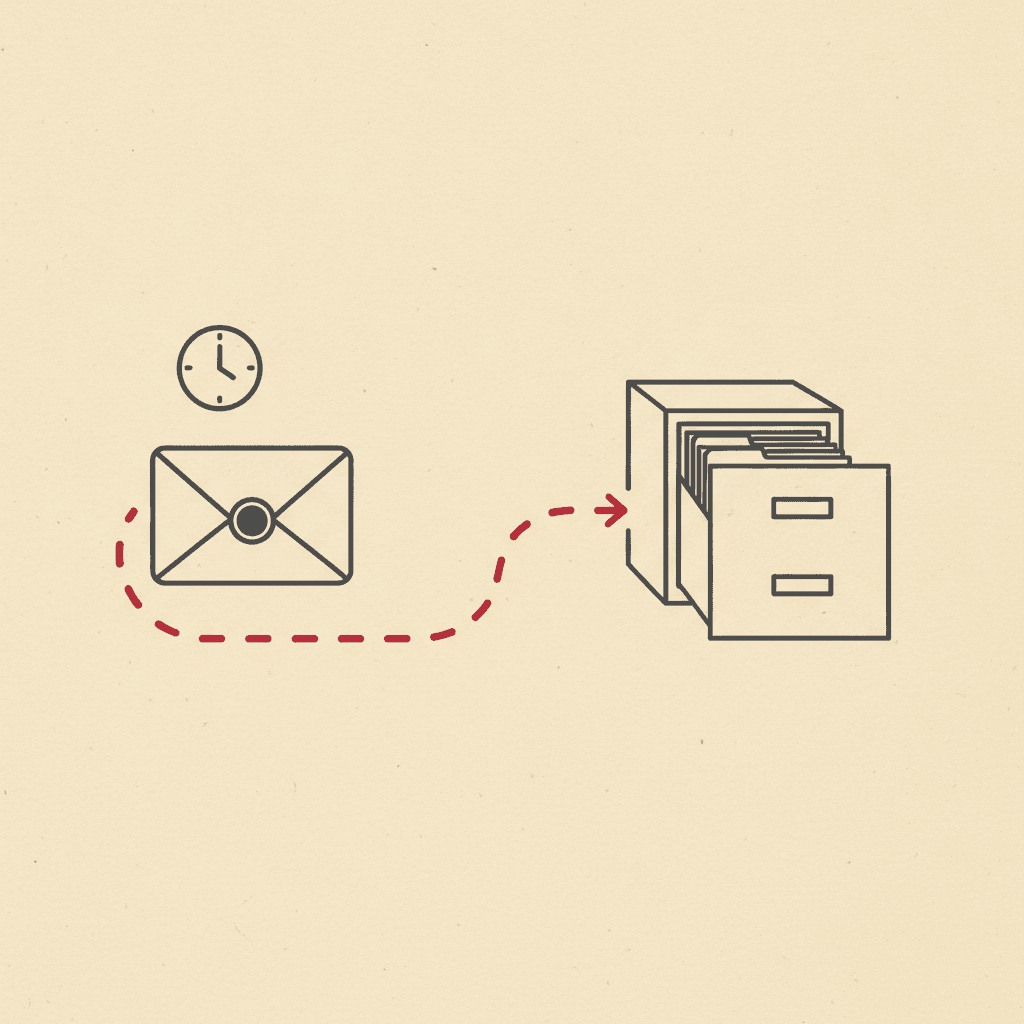
- Canada Post Mail Forwarding is temporary by design. The longest single term you can buy is 12 months. After that you must renew (and pay again) or stop forwarding. There is no permanent forwarding option.
- Forwarding does not change your address. Senders keep using the old address forever. Canada Post quietly intercepts the mail and re-sends it to the new one — adding 2–4 business days and stripping out anything Canada Post chooses not to forward.
- A virtual mailbox replaces the address. You give out a new permanent street address, mail is received and scanned at that address, and you read it from anywhere in the world. There is no expiry and no second redirect.
- They solve different problems. Forwarding is a transition tool for a household that has actually moved. A virtual mailbox is an infrastructure tool for someone whose address needs to live somewhere other than where they sleep — long-term remote founders, frequent movers, newcomers, snowbirds, and corporations operating across provinces.
Short answer
Canada Post Mail Forwarding redirects mail from an old residential or business address to a new one for a fixed term (the maximum single term is 12 months), after which the redirect expires unless you pay to renew. A virtual mailbox replaces the address entirely: you receive a new commercial street address that you keep indefinitely, and incoming mail is scanned, stored, or forwarded based on what you choose item by item. Forwarding fits a one-time household move. A virtual mailbox fits anything that needs a stable Canadian address while you live, travel, or operate elsewhere.
What Canada Post Mail Forwarding actually does
Canada Post Mail Forwarding is the official redirection service offered through Canada Post for residential and business customers. You apply online or at a post office, pay a fee tied to the term you choose, and Canada Post begins re-routing your mail from the old address to a new one inside Canada (or, with a separate international product, abroad).
Term length. Canada Post sells Mail Forwarding for a fixed term, and the maximum single term you can purchase is 12 months. The exact term options and rates change from time to time, so confirm the current choices on the Canada Post website. Customers can renew when the term ends, but renewal is a fresh purchase at the prevailing rate — there is no discount for continuity, and there is no permanent option.
What Canada Post Mail Forwarding redirects:
- Lettermail (standard envelopes and letter-class mail)
- Personalized addressed mail
- Most addressed Admail (addressed marketing mail)
What it generally does not redirect:
- Mail addressed to "Occupant" or "Resident" rather than your name
- Unaddressed Neighbourhood Mail (the bulk flyers and grocery store inserts)
- Parcels and packages. Canada Post Mail Forwarding redirects letters, registered mail, and addressed magazines — but parcels and packages do not redirect under standard Mail Forwarding. This is a category-level exclusion, not a fee question, and Canada Post documents it explicitly in the product description.
- Mail without sufficient postage
- Anything from couriers other than Canada Post (FedEx, UPS, Purolator, DHL run on their own redirect systems, each with separate fees and time limits)
How long delivery takes after forwarding starts. The redirect adds an internal handling step. Most forwarded mail arrives 2 to 4 business days later than it would have at the original address, and during the first week of the redirect there is typically a backlog while sorting routes update.
Setup lead time. Canada Post advises purchasing Mail Forwarding well before you need it, because the account setup and first redirect cycle take several business days to come online (residential is usually faster than a business application). Forwarding purchased on the day of the move means the first stretch of mail still delivers to the old address before the redirect begins working. Confirm current lead times on the Canada Post website.
Pricing. Canada Post publishes residential and business Mail Forwarding rates separately, priced by term length, with higher rates for business and for out-of-province or international forwarding. Canada Post adjusts these rates from time to time, so confirm the current pricing on the Canada Post website before budgeting rather than relying on a figure quoted elsewhere.
What Canada Post Mail Forwarding does not do
The product name describes the limit accurately — it forwards mail. It does not change anything else about your address situation.
Your old address is still your address. Senders keep writing the original address on envelopes and packages forever. The CRA, your bank, your insurance provider, your provincial registry, and every magazine subscription you ever signed up for continue to send mail to the place you no longer live. Canada Post intercepts it on the way through. The day you stop paying for forwarding, all of that mail starts being delivered to the old address again — to whoever lives or works there now.
You still have to update your address everywhere, eventually. Forwarding buys you time to update the address on file with each individual organization. The CRA, banks, the provincial registry (if you have a corporation), the SIN/Service Canada, your driver's licence, your insurer, and every business you have an account with — each is a separate update. Forwarding is a grace period for that catch-up work, not a substitute for it.
No scanning, no remote viewing, no item-level control. Canada Post forwards physical envelopes to a physical address. There is no online dashboard, no scan-on-demand, no "open and read this one but recycle the rest" workflow. If you are abroad, the mail piles up at whatever Canadian address you forwarded to, and someone has to physically open it.
The 12-month ceiling is a hard ceiling. Canada Post's residential mail forwarding is sold as a transition product for households that have moved, not as a long-term mail-handling solution. Internal eligibility rules and renewal limits apply, and customers who attempt to forward indefinitely from the same old address eventually run into restrictions. For a permanent change of where mail should arrive, the official answer is to update the address with the sender — not to stack forwards.
Couriers are out of scope. A growing share of business mail is parcel traffic delivered by FedEx, UPS, Purolator, Amazon Logistics, or carrier-direct from large e-commerce platforms. Canada Post Mail Forwarding does nothing for any of it. Each courier has its own redirect product, usually short-term and per-parcel.
Where a virtual mailbox is fundamentally different
A virtual mailbox is a different category of product. It does not redirect mail from an old address — it gives you a new address that is itself the destination. Mail arrives at a real commercial street address (in Auteur's case, in Toronto and Vancouver), the provider opens and scans envelopes you ask them to scan, holds packages for pickup or onward shipping, and gives you remote control of what happens to each item.
The address itself is different.
- Canada Post Mail Forwarding: same old address, intercepted in transit.
- Virtual mailbox: a new commercial address you hand out to senders. Updates flow to the new address from day one and never stop, because the address never expires.
There is no term length.
- Canada Post Mail Forwarding: a fixed term up to a 12-month maximum, then renewal-or-end.
- Virtual mailbox: month-to-month, year after year, as long as you keep the account active.
Mail handling is item-level and remote.
- Canada Post Mail Forwarding: every piece is physically re-shipped, sealed, to a physical address.
- Virtual mailbox: each item shows up in your dashboard with the envelope photographed. You choose to scan the contents, hold the original, forward it, or shred and recycle. You do this from your phone, on the other side of the world if you want to.
All carriers are accepted.
- Canada Post Mail Forwarding: Canada Post mail only.
- Virtual mailbox: Canada Post, FedEx, UPS, Purolator, DHL, and Amazon Logistics all deliver to the same suite. The mailroom signs for what needs signing.
The address can be used for business, banking, and government.
- Canada Post Mail Forwarding: irrelevant — there is no new address to use.
- Virtual mailbox: the address is a real commercial street address suitable for the CRA, provincial registries, and Canadian bank account openings.
When Canada Post itself recommends an alternative
Canada Post positions Mail Forwarding as a temporary post-move redirect, not a long-term mail solution. For anything beyond that — a stable address you keep while you live, travel, or operate elsewhere — a private virtual mailbox is the category that fits.
This is the same conclusion the rest of this article arrives at from the user side: Canada Post Mail Forwarding fits a one-time household move with a known new permanent home. Anything that needs a stable address while you live, travel, or operate elsewhere — multi-year remote work, frequent relocation, business operations across provinces, parcels from couriers other than Canada Post — sits outside Canada Post's product scope by Canada Post's own framing. See 6 Best Virtual Mailbox Services in Canada for the full comparison of providers.
Strikes and labour disruptions: the dependency neither product removes — and the one that does
Between 2024 and 2026, Canada Post went through more than two years of labour disputes with the Canadian Union of Postal Workers (CUPW), including roughly seven weeks of nationwide strikes that froze letter mail and parcels alike. For small businesses, the recurring damage was the same each round: invoices that never arrived, cheques stuck in the network, and CRA correspondence sitting in limbo. That cycle formally closed when CUPW members ratified new collective agreements on June 1, 2026 — but the agreements run until January 31, 2029, which means the next negotiation window is already on the calendar.
Mail Forwarding offers no protection here, and neither does a PO Box — both still depend on Canada Post moving the physical item. What a virtual mailbox changes is the shape of the dependency:
- Inbound mail is digitized at the address. Whatever does arrive is scanned the same day, so a disruption delays paper, not information. Nothing piles up unseen.
- Outbound forwarding is courier-agnostic. When you need a physical item moved during a Canada Post disruption, a virtual mailbox operator can hand it to FedEx, UPS, or Purolator — forwarding with Canada Post's own product stops with Canada Post.
- The address itself never goes on strike. Your CRA, bank, and registry filings keep pointing at the same address through any disruption, and pairing it with CRA My Business Account online mail removes the postal layer from the most time-sensitive correspondence entirely.
None of this is a prediction that another strike is coming — it is the observation that a business address whose usefulness depends on a single carrier's labour calendar is a structural risk you can simply configure away.
Side-by-side comparison
| Canada Post Mail Forwarding | Virtual Mailbox | |
|---|---|---|
| What it changes | Where Canada Post delivers your mail (temporarily) | Your address itself (permanently) |
| Maximum single term | 12 months | No expiry — month-to-month |
| Renewal model | Pay again at full price each term | Continuous monthly subscription |
| Address updates with senders | Still required, just deferred | Done once, then permanent |
| Carriers covered | Canada Post only | Canada Post, FedEx, UPS, Purolator, DHL, Amazon |
| Mail visibility | None — physical re-delivery only | Online dashboard with envelope and content scans |
| Item-level control | No | Yes — scan, hold, forward, or shred per item |
| Use as registered business address | No | Yes |
| Use for CRA / bank / registry filings | No | Yes |
| Works while you are abroad | Limited — mail still piles up at a Canadian address | Yes — read and act remotely |
| Best for | A one-time household move with a new permanent home | Long-term remote presence, frequent movement, business address |
Scenarios — which one actually fits
Scenario 1: You moved across town and your new place is permanent.
Use Canada Post Mail Forwarding for 6 to 12 months while you update the address with the CRA, your bank, your employer, your insurance provider, the provincial driver licensing body, and every subscription on file. Cancel forwarding when the inbox at the new address is steady. This is exactly what the product is designed for.
Scenario 2: You're moving multiple times in the next two years.
Forwarding will not survive multiple moves cleanly — each move resets the chain, and the 12-month ceiling means you will be renewing or re-applying constantly. A virtual mailbox is one address that follows you through each move because you are the one moving, not the address. This is a common pattern for graduate students, contract workers between cities, and newly arrived immigrants in their first eighteen months in Canada.
Scenario 3: You're going abroad for a year or longer.
Canada Post Mail Forwarding is the wrong tool. The mail still arrives at a Canadian physical address, and someone has to open it for you. A virtual mailbox lets you read scanned mail from anywhere, archive what doesn't matter, forward only what you need, and keep the address active on every Canadian record while you're away. This is the standard setup for snowbirds, sabbatical-takers, digital nomads, and Canadians on overseas postings.
Scenario 4: You run a business out of your home and don't want your home address public.
Forwarding does nothing for this — the original address is still the public one on the corporate registry. A virtual address that is also a real registered office replaces the home address entirely on the public record while still legally satisfying the registered-office rule.
Scenario 5: You're incorporating in Ontario but expanding into BC (or vice versa).
Forwarding can't help with this either. Extra-provincial registration requires a real street address inside the host province. A virtual mailbox in both Toronto and Vancouver gives you addresses for Ontario and BC simultaneously — under one account, one mail dashboard.
Scenario 6: You're between leases for a few months and need a stable address now.
This is the borderline case. Forwarding works if "between leases" really means under a year and you have a known new address coming. A virtual mailbox works if you're not sure how long the gap will last, or if you'd like to stop dealing with it permanently.
International forwarding: the separate Canada Post product and why virtual mailbox wins for cross-border
Canada Post sells International Mail Forwarding as a distinct product from its domestic version. The product is priced separately, with residential, business, and international tiers each running on their own rate card — confirm the current schedule on canadapost.ca rather than budgeting from any figure quoted elsewhere. The mechanics are the same as domestic forwarding (intercept at the old address, re-route to a new one) with one important addition: international forwarding hands off to the destination country's postal operator via the Universal Postal Union (UPU) network. Canada Post passes letters to USPS for U.S. destinations, to Royal Mail for the U.K., to Australia Post for Australia, and so on. Each hand-off introduces another sorting step and another opportunity for delay.
Three constraints carry over from the domestic version and matter more for cross-border setups.
The 12-month ceiling still applies. International forwarding is sold in 6-month and 12-month terms, with the same one-year hard cap on a single forwarding instruction. If you are abroad for longer than a year, you will renew, switch products, or lose the forward.
The instruction still requires an active Canadian source address. International forwarding intercepts mail at a Canadian address you already hold; it does not create a new Canadian address for you. If the Canadian address goes away — you give up the apartment, the family member moves, the parents downsize — the forward unravels with it. This is the structural reason expat-bound senders often need a virtual mailbox first to anchor the Canadian end before they leave.
CRA paperless removes part of the demand entirely. Enrolling for paperless My Account / My Business Account turns CRA correspondence into a notification on the dashboard rather than an envelope that needs forwarding. The cross-border letter volume after CRA paperless drops materially, which often reduces the international forwarding problem to bank statements, provincial registry letters, and a small tail of low-frequency senders.
A virtual mailbox restructures the same problem from the opposite end. Instead of running a Canadian address you no longer live at and paying to relay each piece of mail across an ocean, you keep one Canadian commercial address that you do not need to physically occupy. Mail arrives, is scanned, and is read remotely. Items that need to be shipped onward are forwarded internationally only by exception — typically a few cheques, a tax slip you want on paper, or a bank-specific document that does not come through online channels. For the long expat tail — sabbaticals, multi-year postings, indefinite remote work from another country — this is the pattern that holds, which is why our deep-dive on Canadian expat business mail handling treats virtual mailbox plus selective onward forwarding as the default cross-border setup.
How to switch from forwarding to a permanent virtual address
If you've been renewing Canada Post Mail Forwarding year after year, the pattern usually breaks down somewhere in year two or three — either the renewal limits kick in, or the cost of renewing repeatedly exceeds twelve months of a virtual mailbox. The transition is straightforward.
1. Reserve a virtual address in Toronto or Vancouver. Pick the city that matches your business province if you have a corporation, or the city you visit most often otherwise. Auteur's account is one suite per city; many customers hold both for cross-province registration.
2. Update the address on every account, in priority order.
- CRA business and personal accounts (My Business Account / My Account)
- Provincial business registry, if you have a corporation
- Banks and credit cards
- Insurance providers
- Driver's licence / provincial health
- Service Canada / SIN, if applicable
- Subscriptions, employer payroll, and the long tail of low-frequency senders
3. Run Canada Post Mail Forwarding in parallel for the last 60 to 90 days. This catches anything that updates more slowly than expected. Cancel forwarding once you've gone two consecutive weeks without any forwarded mail arriving — at that point everything important has migrated.
4. Use the virtual mailbox dashboard to triage what arrives. Most customers find that 80% of incoming mail is recycle-on-sight, 15% needs to be scanned and read, and 5% needs to be physically forwarded or held. Item-level control collapses what used to be a weekly ritual into a 30-second tap.
FAQ
Can I use Canada Post Mail Forwarding to a virtual mailbox address?
Yes, and this is a common pattern during the first few months of a switch. You forward your old address to your new Auteur address for 4 to 6 months, which buys time to update the address on file with the CRA, your bank, your provincial registry, and every account on the long tail. Once those updates settle, you cancel forwarding because the mail is now arriving at the virtual address directly. Forwarding is the bridge; the virtual mailbox is the destination.
Why doesn't Canada Post just offer permanent mail forwarding?
Because forwarding is operationally a workaround, not a record change. Every forwarded letter is intercepted, re-sorted, and re-routed inside the Canada Post network — that's expensive at scale and unreliable for anything time-sensitive. Canada Post's intended permanent solution is for senders to update your address on their records, which is why forwarding is sold in fixed terms. A virtual mailbox solves the underlying problem differently — by giving you an address that is itself the right destination, so no rerouting is needed at all.
Will a virtual mailbox accept mail from couriers Canada Post doesn't handle?
Yes. A full-service virtual mailbox is a staffed commercial mailroom that signs for and accepts deliveries from Canada Post, FedEx, UPS, Purolator, DHL, Amazon Logistics, and carrier-direct deliveries from major e-commerce platforms. This is one of the largest practical differences from Canada Post Mail Forwarding, which only handles Canada Post mail and does nothing for the growing share of business mail that arrives via courier.
Bottom line
Canada Post Mail Forwarding and a virtual mailbox are not competing products — they solve different problems. Forwarding is a finite-term redirect that helps a household or business get through a move while updating the address on file with senders. A virtual mailbox is a permanent address that replaces the old one outright, with remote item-level control of every piece of mail that arrives.
If you've moved once and you have a new permanent home, buy six months of Canada Post Mail Forwarding and use it as a grace period. If your address needs to live somewhere other than where you do — because you travel, you run a business out of your home, you're between leases, you're moving to Canada from abroad, or you operate in more than one province — reserve an Auteur address in Toronto or Vancouver and stop renewing forwards.
If the address in question is American, the rules are different enough that the comparison changes shape: USPS runs its own clocks on forwarding and will not forward mail addressed to a mailbox service at all. We covered that separately in mail forwarding vs a virtual mailbox in the United States.